

 800-901-1102
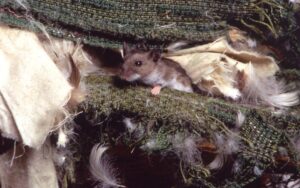
Considered one of the most problematic and economically important pests in the United States, is the house mouse (Mus musculus). This mouse lives and thrives around homes, businesses and farms (wherever people are, they will be). Mice have the ability to virtually make us sick. They consume food meant for humans, pets, farm animals and other wildlife. They contaminate food and food-preparation surfaces with their feces and urine, which can contain the bacterium that causes food poisoning (salmonellosis) and contribute to other human diseases including asthma. They also destroy food, books, furniture and appliances with their gnawing. Mice may be tiny, but they are huge pests!
Mice have well developed senses of taste, hearing, smell and touch. They are excellent climbers and can run up any rough vertical surface. These small rodents, will run horizontally along wire cables or ropes and can jump up to 13 inches from the floor onto a flat surface. Their most impressive feat is their ability to slip through a crack that a pencil will fit into (slightly larger than 1/4 inch in diameter).
Mice are explorers and scavengers extraordinaire. They are always on the lookout for shelter, water, and food. If they have chosen your home and taken up residence it doesn’t mean it’s dirty or messy. It’s just a target of opportunity for a mouse.
Mice leave a lot of clues as to their presence inside a home or business. Their droppings are deposited wherever they roam and so is urine. This accounts for a musty odor when they are present. Droppings are about the size of a kernel of rice, but bigger ones might mean you’re looking at a rat infestation instead. If you have any amount of dust on your floors or counters, you might be able to see their footprints. Mice are a gnawing rodent,
 so be alert for evidence of mice, chewing on wood, electrical wires, food packaging, or even loose paper (scraps of paper or cloth are favorite nesting materials). Also, around dawn or dusk, you may hear mice or rats scampering in the attic, behind walls, inside crawl spaces or in cabinets. Don’t be surprised if your pets, paw at walls and cabinets where mice are hiding.
Keeping mice out of homes and other buildings takes preparation, persistence and patience. 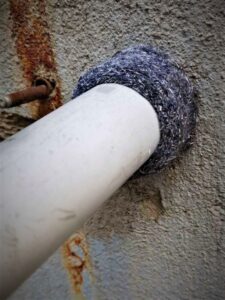 The first step is to batten down the hatches, by mouse proofing! Fix exterior walls, block up cracks and crevices and holes around electrical wiring and plumbing pipes where they enter a building (steel wool works). Fix window and ventilation screens. Invest in door-sweeps for exterior doors and garage doors. Fix leaky water pipes and faucets (water attracts mice).
Now that the house (building) is secure, it’s time to remove any hiding places on your property. Mow tall grass, prune dense foliage, move the wood pile away from the house, pick up fallen fruit, rotting vegies, and birdseed off the ground and don’t leave pet food and water outside. Make sure trash cans are tightly lidded and remove yard debris. 
These are all things you can do to help make your property mouse unfriendly. If they can’t get in, and they can’t find food, shelter or water easily, they will most likely go elsewhere.
If you are sick of mice, already tackling a mouse infestation and results are less than satisfactory, it’s time to call a professional pest control company. Corky’s provides effective year-round mouse control and prevention for Southern California homes and businesses with Corkys Mouse Control Service. Safeguard your health. Don’t take a chance that mice will make you virtually sick. Get rid of them now.
Need to get mice out of the house or to take care of overwhelming populations on your property, call Corkys Pest Control 1-800-901-1102 or contact us online with questions or to schedule service.
Living in Southern California you most likely have more than just mice as pests. Corky’s Ultimate Pest Control Service takes care of Ants and Spiders and controls ticks, aphids, whitefly, mosquitoes and more.
0 Comments