

If you hear scratching at night or find droppings along the garage wall, your first thought is simple. You have mice. But knowing which type of mouse you have matters more than most homeowners think.
The most common comparison is between house mice and deer mice. The differences affect health risks, nesting habits, and how fast a problem can grow, which is why proper rodent control in California starts with correct identification.
In Southern California, several types of mice are year-round residents. Some come in from nearby open land, while others live almost entirely indoors with people. Knowing whether you have a house mouse or a deer mouse helps explain where it came from, how it got inside, and what to do next.
Most mouse problems start small, and the early signs are easy to miss. Knowing what type of mouse you are dealing with makes it easier to spot where they came from, where they are nesting, and how to stop the problem from getting worse.
Key Takeaways
House mouse or deer mouse?
Two California mice that look alike but carry very different risks.
Deer Mouse
Disease riskHouse Mouse
Contaminates- House mice usually live indoors and reproduce faster than deer mice.
- Deer mice often come from rural, wooded, or grassland areas and pose higher health risks.
- Droppings, nesting sites, and coloration help identify the species.
- Sealing entry points and proper mouse control stop repeated problems.
Video: Mice Species Fast Facts
This short video explains common mouse species, including deer mice and house mice, and highlights how their habits differ. It helps homeowners understand the basics of identification, nesting behavior, and why correct identification matters before choosing mouse traps or long-term rodent control.
Understanding The Types Of Mice Found In California
When homeowners ask about types of mice, many are surprised by how many species live across California. The most common mice found near homes are house mice, deer mice, and other field mice. Voles sometimes get mentioned, but they behave very differently.
House mice, scientifically known as Mus musculus, adapted to living alongside people. They rely on homes for warmth, food, and nesting materials. Once inside, they build nests in walls, attics, crawl spaces, and other hidden areas.
Deer mice, known as Peromyscus maniculatus, live outdoors by default. Many people call them white-footed mice or field mice. They prefer rural areas, grasslands, and wooded spaces, but they may move into garages or sheds when temperatures drop.
House Mouse Identification And Behavior

House mice often look plain at first glance. Their fur is usually gray or light brown, and their bellies do not stand out much from the rest of their bodies. Their tails appear hairless and match their body color. Their eyes are smaller compared to those of deer mice.
Inside homes, house mice build nests quickly using insulation, paper, fabric, and other soft materials. They favor warm areas near stored food, which is why kitchens, pantries, laundry rooms, and walls behind appliances often show the first signs.
A house mouse infestation can grow fast because they reproduce year-round. If you find droppings along baseboards or gnaw marks on food packaging, you likely have a house mouse problem rather than a single mouse passing through.
Deer Mouse Identification And Outdoor Habits
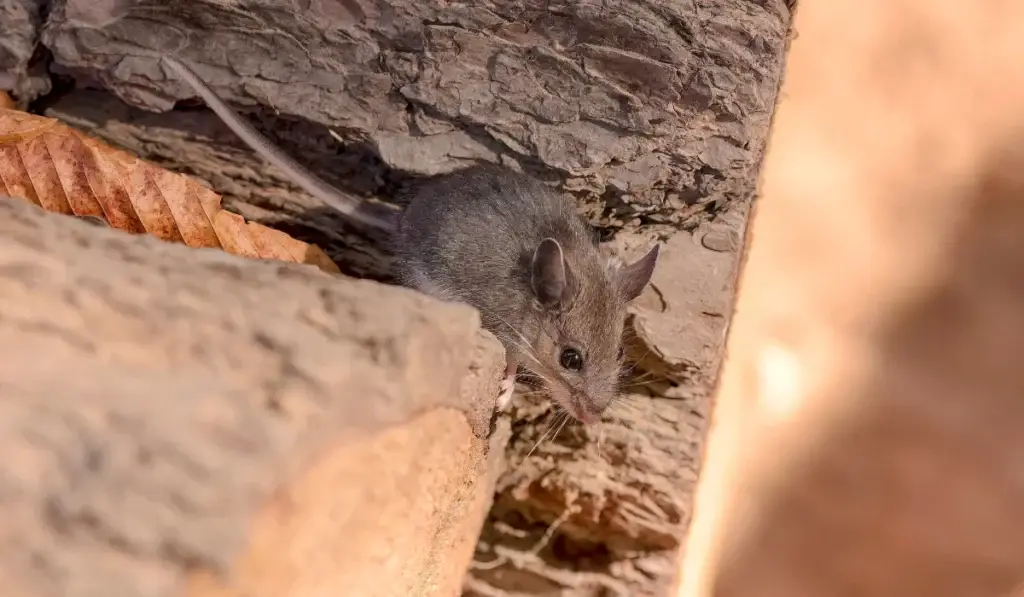
Deer mice have more noticeable features once you know what to look for. They have larger eyes, a white belly, and a two-toned tail that appears dark on top and light underneath. Their coloring helps them blend into outdoor settings.
Deer mouse droppings often appear in garages, sheds, crawl spaces, or attics before they reach living areas. These mice usually enter structures while searching for warmth or safe nesting spots during cooler months.
Unlike house mice, deer mouse populations usually start outdoors and move inward. This outdoor connection matters because deer mice can carry hantavirus, which raises health concerns when cleaning droppings or nests.
Droppings, Gnaw Marks, And Other Signs
Both species leave droppings, but location helps tell the story. House mouse droppings are usually found indoors, near food sources, and along walls. Deer mouse droppings often show up near entry points, garages, sheds, or crawl spaces.
Gnaw marks also offer clues. House mice chew frequently to keep their teeth short, which can damage baseboards, wiring, and food containers. Deer mice may cause less damage at first, but the damage increases if they settle inside.
When cleaning droppings, always use disinfectant and avoid sweeping or vacuuming dry debris. This step matters most with deer mice due to the risk of hantavirus exposure.
Health Risks And Why Identification Matters
Health risks differ between species, which is why searches for house mice vs. deer mice in California matter. House mice contaminate food and surfaces and may bring fleas into the home. Deer mice raise concerns about hantavirus exposure, especially in enclosed spaces.
Deer mouse populations in the western United States spread hantavirus pulmonary syndrome. While cases remain rare, proper cleanup steps reduce risk during inspection and removal.
Knowing the mouse species also helps guide the right control plan. Treating every mouse problem the same often leads to repeated activity.
Where Mice Build Nests Around Homes
House mice prefer indoor nesting sites. Professionals often find nests inside walls, attics, basements, crawl spaces, and behind appliances. Once settled, house mice stay close to food and water sources.
Deer mice usually build nests outdoors first, using grass, leaves, and natural materials. When they enter homes, they favor garages, crawl spaces, storage areas, and attic corners.
Understanding nesting behavior helps target active areas and prevents missed activity.
Preventing A Mouse Infestation Long-Term
Stopping a mouse infestation starts with limiting access. Mice can squeeze through openings as small as a dime, so sealing gaps makes a big difference. Steel wool works well for small openings around pipes, vents, and utility lines.
Store food in airtight containers and avoid leaving pet food out overnight. These steps remove food sources that attract house mice.
A proper mouse exclusion plan focuses on closing gaps, reinforcing doors, and sealing vents. This approach reduces the need for repeated mouse traps and reactive treatments.
When To Call A Professional
If you see ongoing signs, it is time to call for help. A mouse control service evaluates activity patterns, species, and entry points rather than guessing. Professional rodent control focuses on removal, cleanup guidance, and long-term prevention.
At Corky’s Pest Control, we handle mouse problems across Southern California, from urban neighborhoods to homes near open land. Our services focus on proper exclusion and follow-up, not quick fixes.
Getting rid of mice takes more than snap traps. A clear plan keeps them from coming back.
Making The Right Choice For California Homeowners
For homeowners dealing with house mouse vs. deer mouse concerns in California, mouse identification is the first step toward a lasting solution. Each species behaves differently, carries different risks, and requires a tailored response.
If you suspect a mouse problem, act early. Addressing activity before nests spread protects your home and health. At Corky’s Pest Control, we help homeowners identify the issue and apply proven year-round mouse control strategies.
Contact us today to get help stopping mice before the problem grows.
FAQs
How can I tell if I have a deer mouse or a house mouse?
Look at coloration and tail markings. Deer mice have larger eyes, a white belly, and a bicolored tail. House mice have a more uniform color and a hairless tail. Location also helps, since deer mice often start in garages or attics.
Are deer mice more dangerous than house mice?
Deer mice pose a higher health risk due to their exposure to hantavirus. House mice still contaminate food and surfaces, but deer mouse droppings require extra care during cleanup.
What is the best way to get rid of mice permanently?
Long-term results come from sealing entry points, reducing food sources, and using professional rodent control. Mouse traps alone rarely stop repeat activity without proper exclusion.