
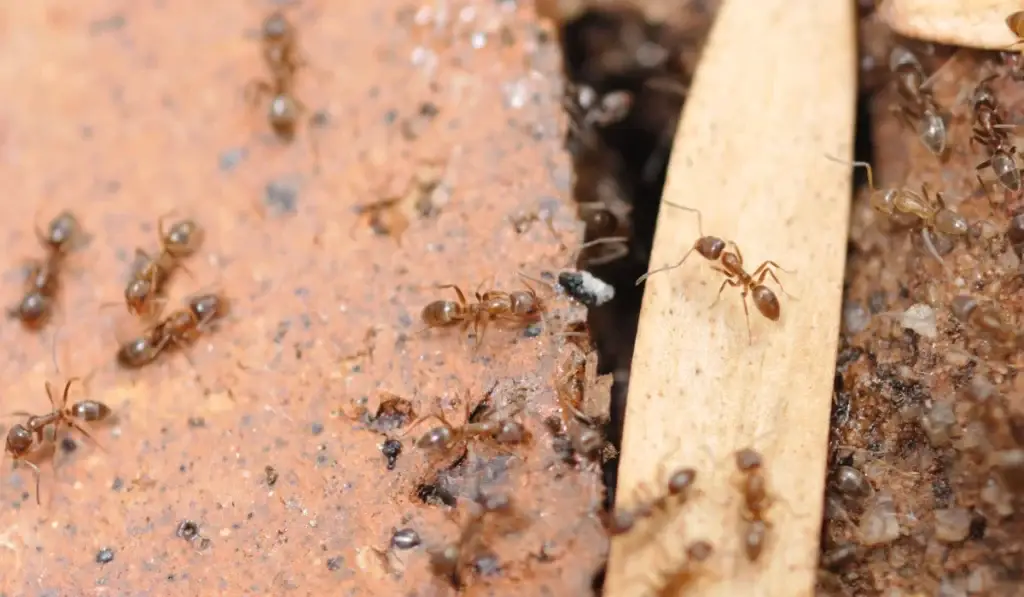
If you live in Southern California, you have likely seen ants disappear one day and return the next. Argentine ants in homes cause constant frustration, making ant control in Southern California especially challenging. You clean the counter, block one trail, and by morning, a new trail appears. Homeowners in San Diego, Los Angeles, and Sacramento all report the same problem.
This ant issue often starts quietly. At first, homeowners may see a few worker ants near sinks or pet bowls. Soon after, steady ant trails form from the yard into the kitchen. Because California has mild winters, these ants stay active year-round, which puts pressure on homes.
Once homeowners understand how Argentine ants behave, control becomes simpler. With proper identification and a long-term plan, it is possible to stop recurring ant problems rather than reacting every few weeks.
Key Takeaways
- Argentine ants form massive connected colonies that make trails hard to eliminate
- Mild winters in California allow ant activity to continue almost year-round
- Sealing entry points and managing moisture are just as important as treatment
- Professional pest control focuses on lasting ant control, not short-term relief
Video: 10 Common Types of Ants You May Encounter
This video walks through ten of the most common ant species homeowners encounter, including several found throughout California. It highlights differences in size, color, and behavior, helping homeowners narrow down what they are seeing indoors and outdoors. Knowing the type of ant involved makes it easier to choose the proper control approach before the problem grows.
What Makes Argentine Ants So Persistent
Argentine ants cause more problems than most household ants. They came from South America and spread quickly because they adapt easily and work together. Unlike native ants, Argentine ants do not fight nearby colonies. Instead, this invasive species forms massive supercolonies that can cover entire neighborhoods.
Because colonies of Argentine ants work together, removing a single visible group rarely solves the problem. The worker ants you see indoors represent only a fraction of the population. These Argentine ant colonies share food sources and queens, allowing them to rebound quickly after disruption.
Across Southern California, including San Diego and San Francisco, these invasive ants push out native ant species. For homeowners, this leads to recurring infestations unless they fix the underlying cause.
How To Identify Argentine Ants Correctly
Correct ant identification matters when dealing with ants. Argentine ants are small, dark brown, and about one-eighth of an inch long. They do not have a stinger. Worker ants move along clear trails rather than spreading out.
Many homeowners confuse Argentine ants with other species or even with termites when activity suddenly appears. This confusion often leads to poor treatment choices. Argentine ants commonly gather near water sources such as sinks, bathrooms, laundry rooms, and irrigation lines.
Outside, they often nest under potted plants, in damp soil, or along tree branches that touch the house. These patterns explain why ant trails disappear and show up in new places.
Why Trails Keep Reappearing Inside Homes
Ants return because scent trails guide steady trails of ants back to food and water. Argentine ants leave chemical markers that other ants follow. Even after cleaning, light traces often remain.
Kitchens and pantries provide easy access to food. Crumbs, spills, pet food, and moisture help Argentine ants survive indoors. When one path gets blocked, the ants simply find another route.
Because there is no real off-season in most parts of California, ants continue searching for food year-round unless homeowners address the colony.
Outdoor Factors That Drive Ants Indoors
Most ant activity starts outdoors. Argentine ants protect insects like aphids and mealybugs because these insects produce honeydew, a sugary food source. As long as honeydew exists, ant activity stays high.
Tree branches touching roofs, thick landscaping near foundations, and overwatering all create nesting areas. When outdoor moisture drops during warmer months, ants move indoors in search of water.
Small gaps around foundations, siding, and utility lines give ants easy access. Without sealing these areas, ant trails shift instead of stopping.
Why Store-Bought Solutions Often Fall Short
Many homeowners start with sprays or repellent products. These may kill visible ants, but they do not affect the colony. In some cases, sprays cause ants to spread into new areas.
Ant bait can work if used correctly, including properly placed bait stations. Placement and timing matter. Bait must match what the ants are feeding on at that moment. Incorrect use often leads to poor results.
General insecticides may temporarily reduce ant numbers, but they rarely eliminate a full Argentine ant infestation. Lasting control focuses on the colony, not just the ants that appear indoors.
Smart Prevention Steps That Actually Help
Long-term ant control always starts with exclusion. Sealing cracks with caulk around doors, windows, and foundations limits access. Addressing leaks and reducing excess moisture removes key water sources that ants depend on.
Trim tree branches away from the home to break ant pathways. Control aphids on plants to reduce honeydew, which lowers outdoor ant pressure.
When homeowners pair these steps with targeted treatment, DIY ant control becomes much easier to maintain.
When To Call A Professional
If ants keep returning after repeated efforts, calling an exterminator may be the next step. Pest control technicians know how to locate nesting areas, track movement patterns, and apply treatments that reach the colony.
We handle this issue daily across Southern California. Our approach focuses on long-term results instead of temporary relief.
Making The Right Choice For Long-Term Ant Control
Recurring ant trails often signal a larger issue that needs consistent follow-through, not guesswork. Addressing the problem early helps reduce frustration and limits the chance of ants spreading to new areas of the home.
Working with a team that understands local ant pressure can save time and prevent repeat disruptions. At Corky’s Pest Control, we provide focused solutions tailored to real conditions in California neighborhoods.
Contact us today to schedule an inspection and take the next step toward lasting ant control.
FAQs
Why do Argentine ants keep coming back after I clean?
Argentine ants leave scent trails that are difficult to remove entirely. Even after cleaning, faint trails remain, guiding worker ants back indoors. Without addressing the outdoor colony and entry points, trails often return.
Are Argentine ants dangerous to people?
Argentine ants lack a stinger and rarely bite. While they are not dangerous like wasps, a large infestation can contaminate food and become a persistent nuisance for homeowners.
What is the fastest way to stop an Argentine ant infestation?
The fastest results come from combining exclusion, proper baiting, and professional pest management. Treating only visible ants delays results, while addressing colonies and nesting sites leads to better long-term control.