

 800-901-1102
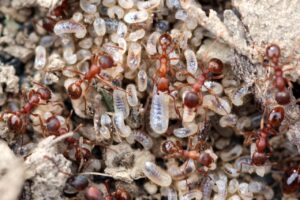 Ants, labor endlessly to support their colonies, each member having a specific job to perform, from the pampered Queens to the multi-tasking female workers to the short lived males, every member of the colony is continually in motion.
So, with all this non-stop activity, the question is, “Do Ants Sleep”?
Scientists say yes! It’s not exactly like human sleep, but ants seem to go through cycles or periods of rest and inactivity in which their body functions and brain activity slow down. It may seem like ants never sleep because some part of the colony is always busy, but individual ants do need to rest.
Studies by researchers at the University of South Florida in St. Petersburg (published in the Journal of Insect Behavior), proved that not only do ants sleep but queens show signs of dreaming.
Worker ants, whose behavior is used to symbolize industry and efficiency, survive on the insect equivalent of hundreds of tiny” power naps” a day. Queens routinely sleep for as much as nine hours a day. Queens definitely rule.
The way an ant colony is designed, suggests that sleep is necessary for the health and longevity of the queens and not so much the workers who are disposable servants of the queen, providing her with food, water, comfort, and protection.
The function of sleep, for ants, is still unknown.
But the lack of rest for the workers seems to help ensure the queens get to live long, peaceful lives.
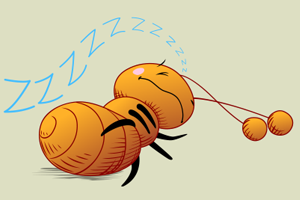
Does a “power nap” sound good to you right now? Go ahead. Enjoy!
0 Comments