

 800-901-1102
Camouflage is an ancient art form among the worlds’ animal species and especially insects. In nature there are many ways to protect against p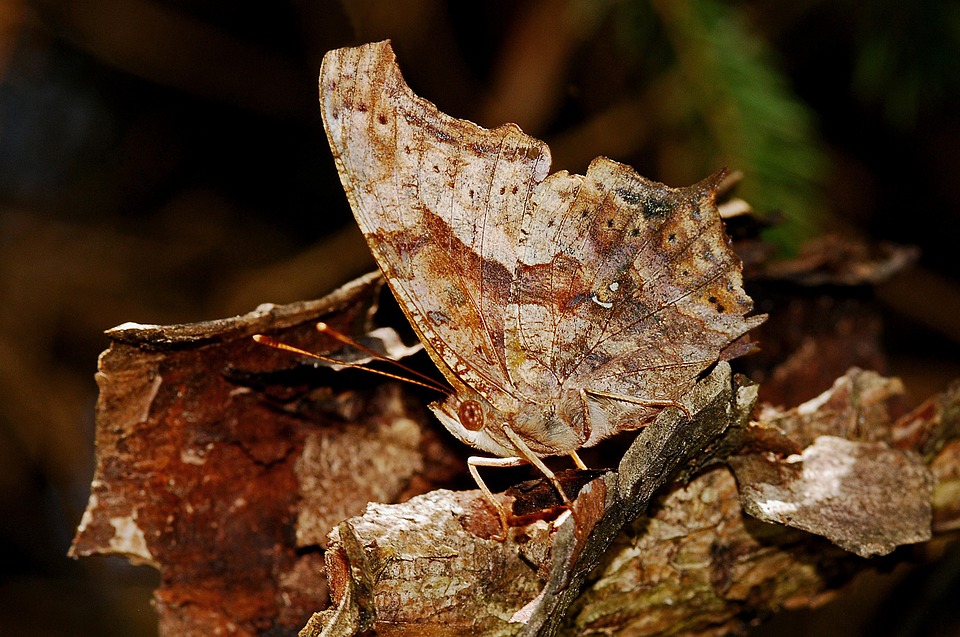 otential predators: armor, poison, noxious smell, size or speed, etc. But perhaps no form of protection is more devious than camouflage.
In nature, sticking out or “being seen”, is only good if, a) you’re poisonous or b) you’re a predator. Even for predators, blending in helps when hunting prey – just think of a leopard hidden in a tall tree in the jungle or a hunter wearing the latest Camo gear, hiding in bushes waiting for his chosen target.
Researchers have long known that camouflage and mimicry have played a significant role in natural selection. Insects that can blend in with their environments are less likely to starve or be eaten and are able to pass on their genes-and their natural disguises-to future generations.
Camouflage is broken into four categories.
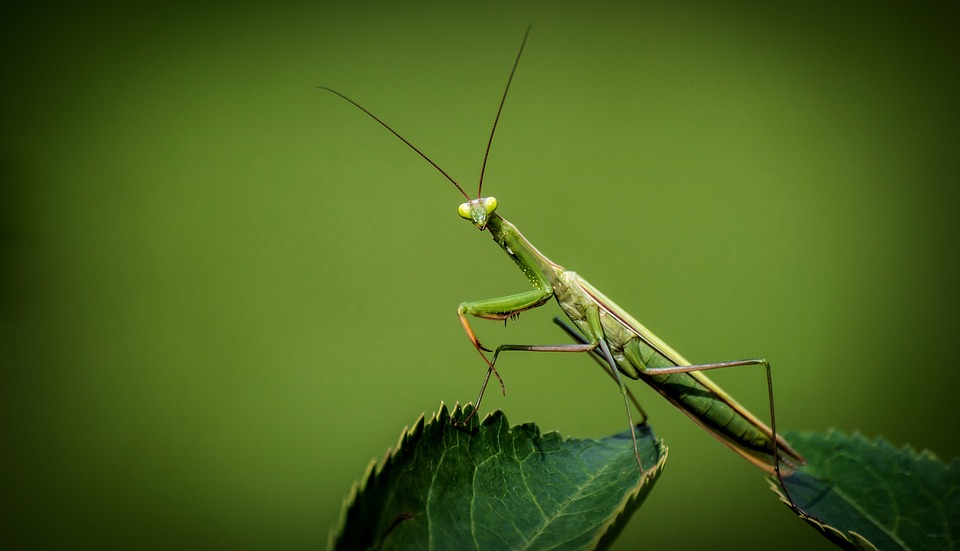
- Concealing Coloration: This is when an insect or oth
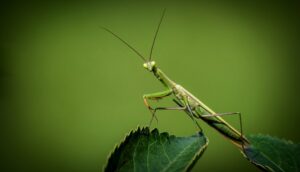 er animal, hides itself against a background of the same color. An example of an insect with this skill would be the Praying Mantis, who’s beautiful green coloration, blends in with the leaves of bushes where it lives and hunts.
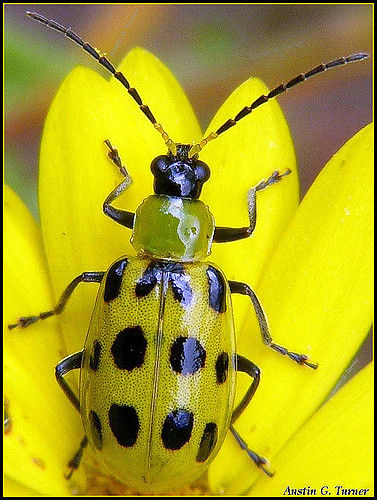
 - Disruptive Coloration: Tigers and leopards also use disruptive
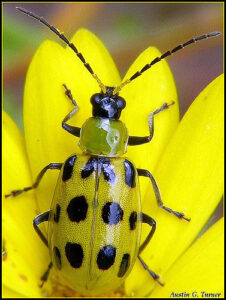 coloration. Their spots and stripes help them hide effectively in an environment where lots of shadows of leafs and spots of light come through the foliage where they hide. Insects that use this form of camouflage are the striped cucumber beetle that is either yellowish-green or orangey-green with three black stripes down its back or the spotted cucumber beetle that is also either yellowish-green or orangey-green with 12 black spots on its back. Spots or stripes – all the better to hide from predators.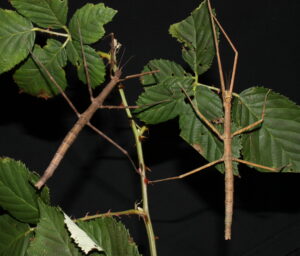
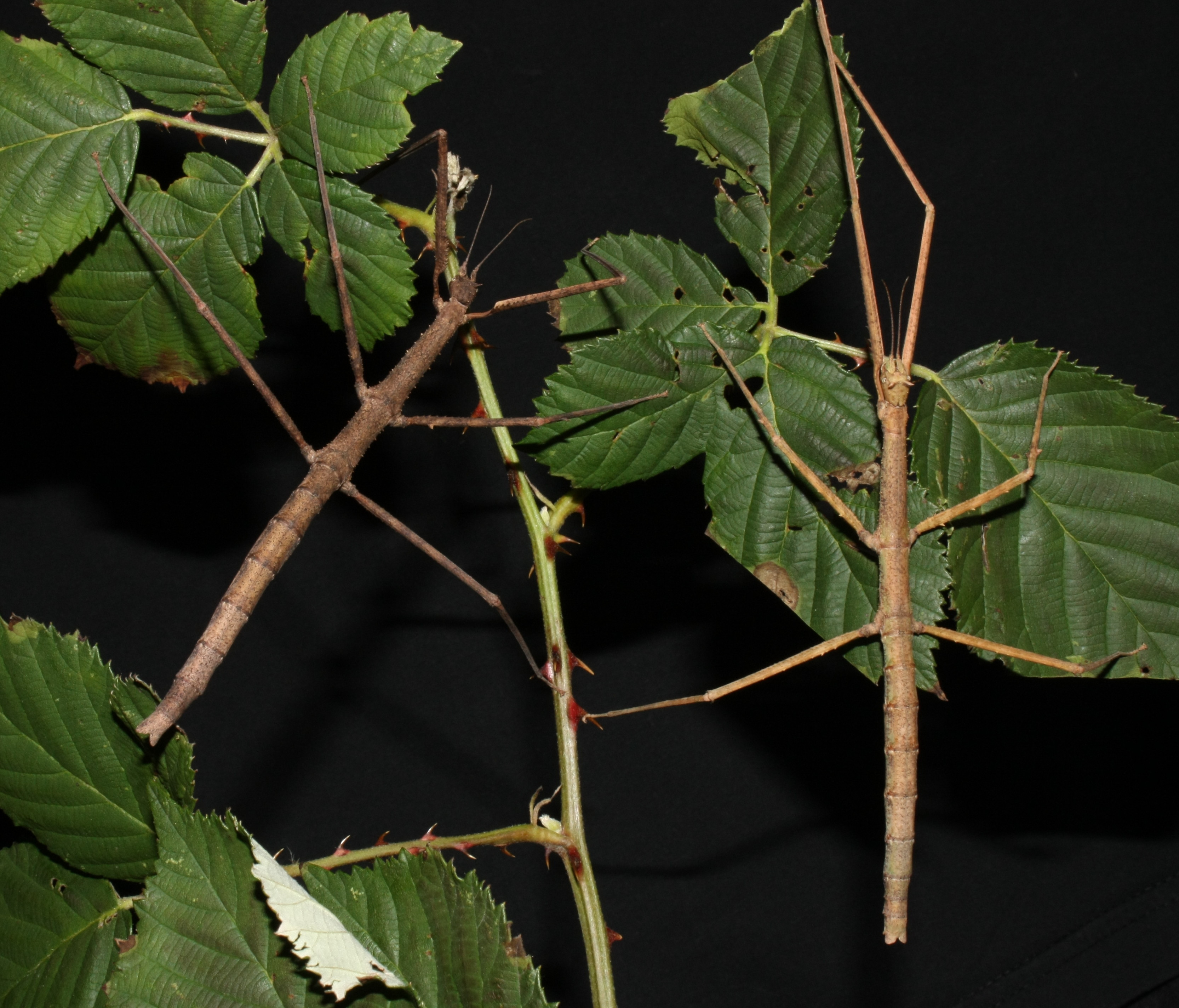
- Disguise: This is like concealing coloration except that the animals blend in with their surroundings by their shape and/or texture rather than color. Insects are masters of disguise. Some examples are; the Katydid, Indian leaf butterfly, and Walking stick insect.
- Mimicry: By developing a certain appearance, an animal species makes itself a harder target for predators.
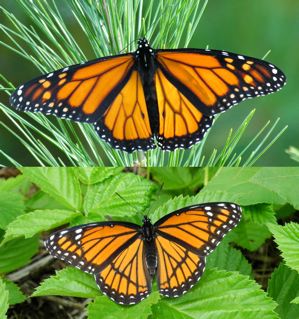
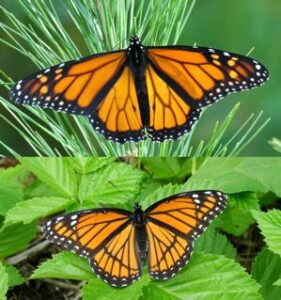 Insects in this group are true imposters. Viceroy Butterflies (bottom of picture) are talented mimics as they safeguard themselves from birds who prey upon them by looking a lot like Monarch Butterflies (top of picture) who are toxic and unappetizing to
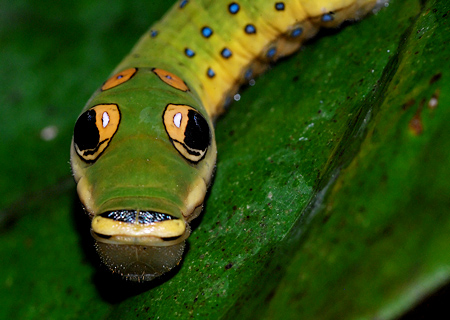
 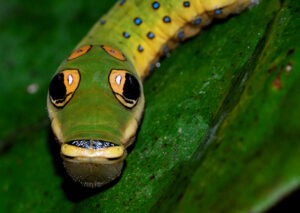 birds. Another great mimic is the Spricebush Swallowtail Caterpillar whose tail actually looks like the head of a snake and is waved back and forth to mimic the movement of a snakes’ head.
Next time you’re out in the garden or walking along a wooded path, and you get the feeling you’re not alone, well, you’re not. They’re watching you!
For more insects with fantastic camouflage techniques, check out these links:
https://www.cals.ncsu.edu/course/ent425/tutorial/Ecology/camo/
https://weather.com/science/news/cool-camouflage-insects-blend-nature-20130829
0 Comments