

 800-901-1102
You turn on the kitchen light late at night and see cockroaches move near the sink, stove, or baseboards. By the time you look again, the roach is already gone. That quick sighting can feel random, but it usually has a reason.
Cockroaches in California tend to show up wherever there’s food, moisture, and a way inside, and the species involved shapes how serious the problem already is. This guide walks through the cockroaches you’re most likely to find in a California home, the signs that point to a bigger population than you can see, and what actually works to get rid of them.
Key Takeaways
- California homes deal with five main cockroach species, and the one you’re seeing determines how fast the problem needs attention.
- Food crumbs, grease, moisture, clutter, and small entry points can keep roaches active even after you clean.
- Droppings, musty odors, shed skins, and daytime sightings are often the first real clue, since roaches themselves stay hidden.
- Sealing gaps and fixing leaks slow an infestation down, but an established population, especially German cockroaches, usually needs professional treatment to fully resolve.
Common Cockroach Species in California
Five cockroach species are commonly regarded as pests statewide, and each one has its own habits, size, and preferred hiding spots. Identifying which one you’re dealing with is the first real step toward solving the problem, since a treatment that works on one species can be the wrong approach for another.
German Cockroach
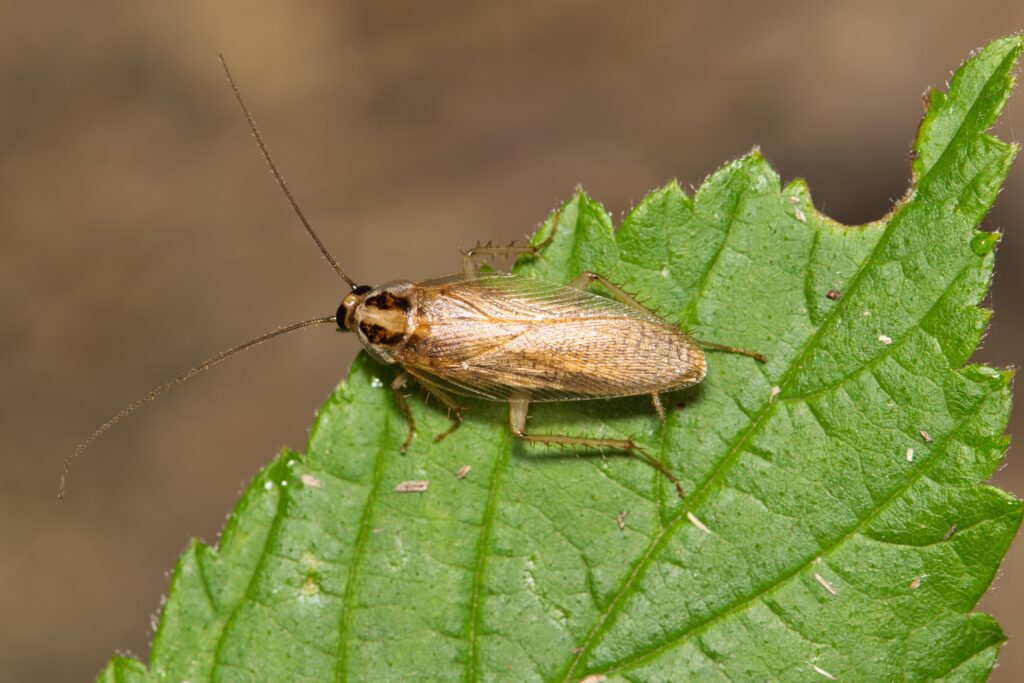
This is the species you’re most likely to find inside a California home, and it’s also the most persistent. German cockroaches are light brown, about ½ to ⅝ inch long, and stick to warm, humid spots near food and water, such as kitchens and bathrooms. A single female and her offspring can produce over 30,000 individuals in a year, which explains why small German cockroach problems rarely stay small for long.
American Cockroach
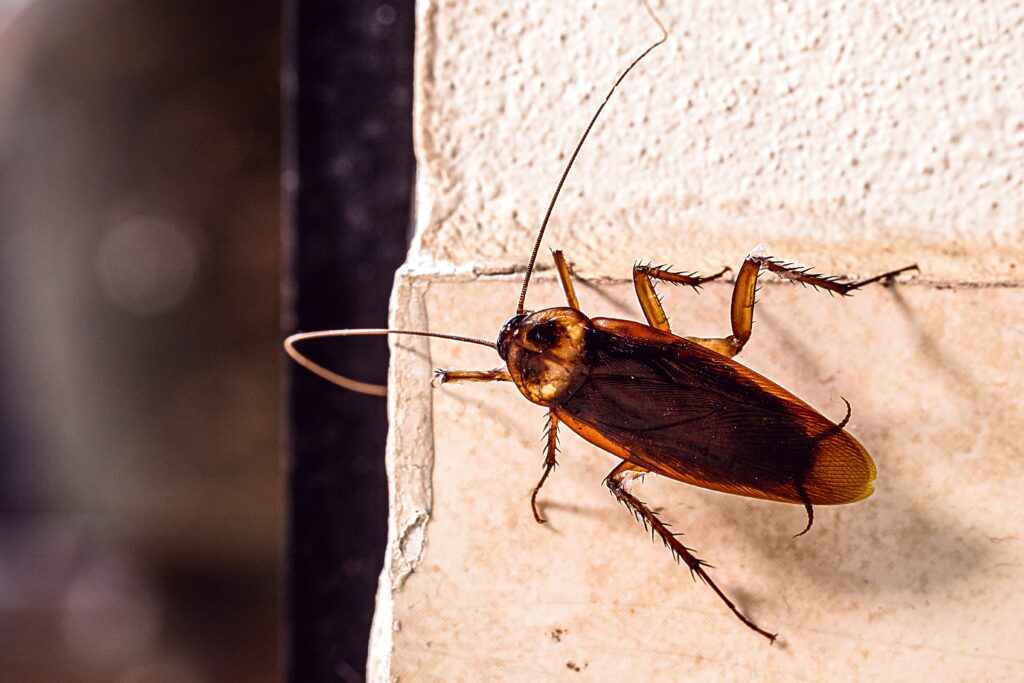
The American cockroach is reddish-brown and can reach about two inches long, which is why it’s usually the one people mean when they describe a “giant” roach. It favors sewers, basements, and damp crawl spaces, and moves freely between outdoor and indoor areas.
Oriental Cockroach
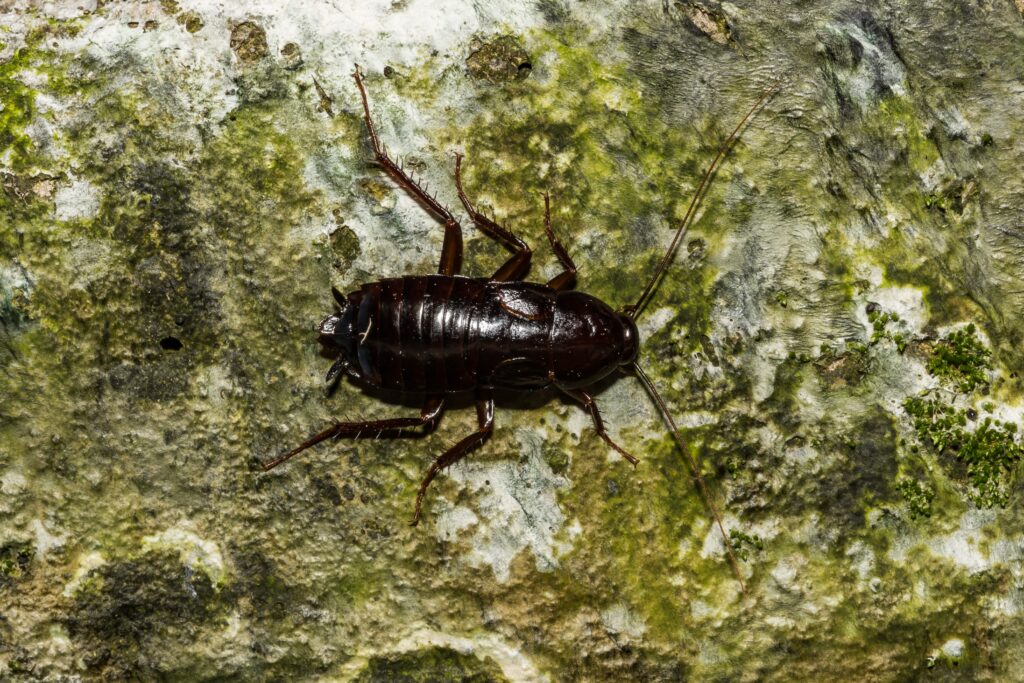
Dark brown to black and sometimes called a water bug, this species prefers damp, secluded areas like drains, crawl spaces, and garages. It survives well outdoors and mainly moves indoors in search of moisture.
Brown-banded Cockroach
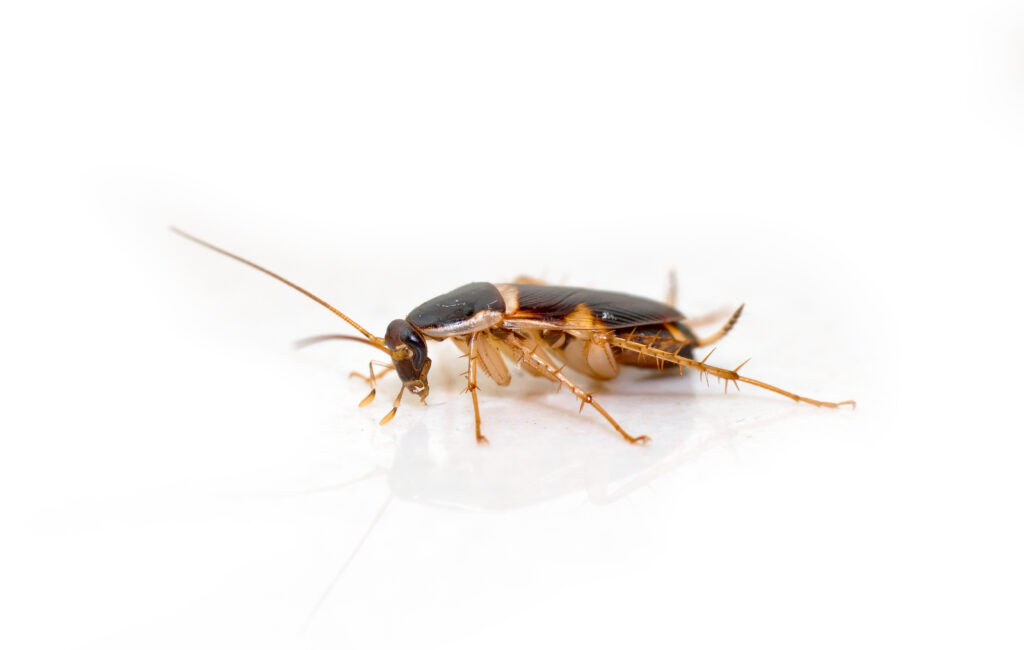
Less common than the German cockroach, this species makes up only a small share of indoor infestations. It tolerates warmer, drier conditions and tends to hide inside furniture, behind wall décor, and near electronics rather than in the kitchen.
Turkestan Cockroach
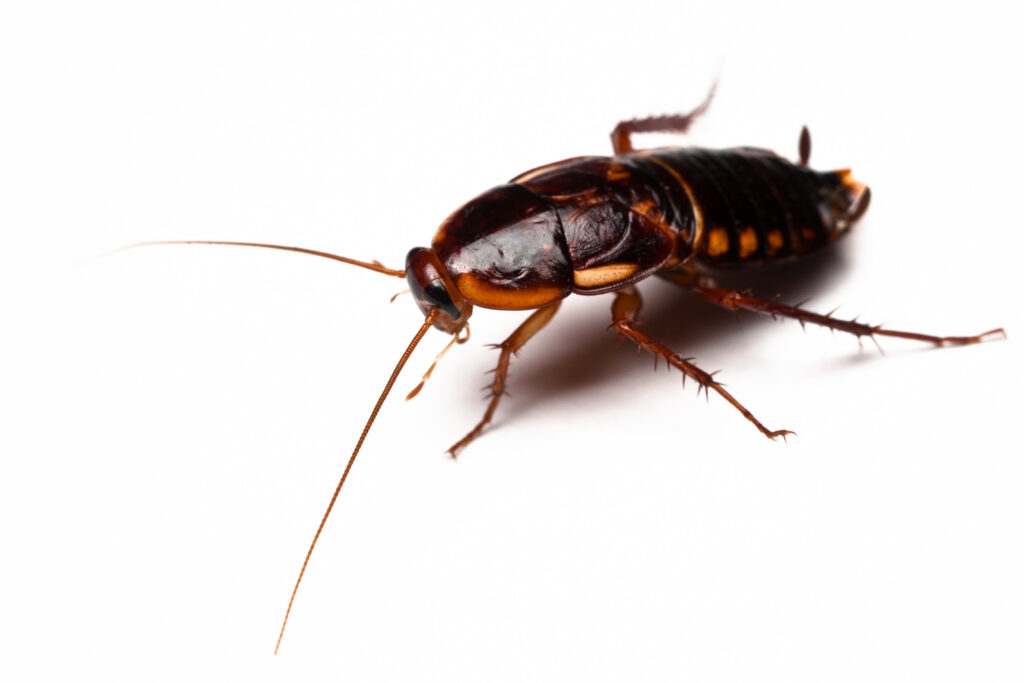
An increasingly common outdoor species in California, the Turkestan cockroach often shows up in water meter boxes, irrigation valve boxes, and cracks in pavement before occasionally wandering toward structures.
Signs of a Cockroach Infestation
Cockroaches are nocturnal, so you’re more likely to notice the evidence they leave behind than the insects themselves. Watch for these clues around kitchens, bathrooms, and other spots with steady food or moisture:
- Droppings that look like small dark specks or coffee grounds, often clustered near food sources.
- A musty, oily odor in cabinets, pantries, or behind appliances.
- Egg cases (oothecae) in cracks, drawers, or corners.
- Shed skins left behind as nymphs grow into adults.
- Roaches seen during daylight hours, which usually means the hiding spots are overcrowded and the population is larger than it appears.
Why Location Within California Matters
Not every cockroach species is spread evenly across the state, and knowing which one is common in your area can help narrow down what you’re dealing with.
The Turkestan Cockroach Is Spreading Outdoors
In Southern California, the Central Valley, and other warm, dry parts of the state, the Turkestan cockroach has been steadily displacing the oriental cockroach outdoors, especially around water meter boxes and irrigation systems. Indoors, the German cockroach remains the most common species statewide, since it thrives wherever it finds steady warmth and a reliable source of food and water, regardless of climate zone.
A Lesser-Known Outdoor Species
California is also home to a lesser-known outdoor species, the three-lined cockroach, which lives in mulch and leaf litter and only occasionally wanders inside. It’s frequently mistaken for a German cockroach nymph, which can lead to unnecessary indoor treatments when the real fix is simply sealing exterior gaps.
Health and Property Concerns
Cockroaches contaminate food and surfaces as they move between unsanitary areas and living spaces, and the concern isn’t only about seeing them. The American Lung Association notes that cockroach droppings, saliva, and body parts can act as allergens that aggravate asthma and trigger allergic reactions in sensitive people, even after the roaches themselves are gone. Beyond the health side, a visible infestation can make it harder to feel comfortable using your own kitchen, which is often what pushes people to finally deal with the problem.
What You Can Do Before Calling a Professional
A few habits make a real difference, especially for smaller or early-stage problems:
- Seal cracks and gaps around pipes, baseboards, and window frames.
- Fix leaking faucets and pipes, since moisture is one of the biggest draws for roaches.
- Store food in sealed containers and clean up grease and crumbs promptly.
- Vacuum regularly in kitchens and bathrooms to remove eggs, droppings, and shed skins.
These steps help slow an infestation, but they rarely eliminate an established one, particularly with German cockroaches, which can hide deep in cracks, appliances, and voids that household cleaning can’t reach.
When Professional Treatment Makes Sense
Sometimes cleaning and sealing aren’t enough on their own, and knowing the difference helps you decide when to bring in outside help.
Signs the Infestation Is Bigger Than It Looks
If you’re still seeing activity after a couple of weeks of cleaning and sealing, or if you spot roaches during the day, it typically means the population has outgrown what store-bought products can handle. A licensed technician can confirm which species you’re dealing with, which determines whether the fix is an indoor program, an exterior treatment, or both.
Why a Combined Approach Works Better
The EPA’s guidance on integrated pest management points to sanitation, exclusion, and targeted treatment working together as more effective and longer-lasting than any single method on its own. If DIY cleaning and sealing haven’t stopped the activity, scheduling an inspection is the fastest way to confirm what you’re dealing with and get a treatment plan built around it.
How Corky’s Pest Control Handles Cockroaches
Corky’s Pest Control has been treating homes and businesses across Southern California for more than 50 years, and the cockroach service reflects the species-first logic covered above.
Corky’s cockroach control service starts with identifying the species and locating the areas where roaches are active. German roaches require a different approach than larger species, and Corky’s may use multiple treatments focused on cracks, crevices, kitchens, food sources, and water sources. For larger roach species, a general pest service can help prevent much of the activity, while the technician may also work with the homeowner or property owner to address moisture sources.
Once activity settles, Corky’s can recommend an ongoing pest control plan based on the property, the species involved, and the conditions that contributed to the activity.
Cockroaches in California: Bottom Line
Whichever species you’re seeing, from a German cockroach breeding in your kitchen to an American cockroach wandering in from a drain, what you can see is rarely the full picture, and household cleaning alone won’t reach the places they’re hiding.
Matching the treatment to the species, a focused program for German roaches, a general pest service for larger ones, and attention to the moisture or entry points drawing them in, is central to how Corky’s approaches cockroach control. Specialty one-time services include a 30-day guarantee starting with the initial visit, and a technician can recommend ongoing pest control if the property’s conditions call for it.
If sealing cracks and cleaning up aren’t keeping the activity down anymore, contact Corky’s Pest Control to schedule an inspection and get a treatment plan built around your home.
Frequently Asked Questions
What is the most common cockroach in California homes?
The German cockroach is the most common indoor species in California. It reproduces quickly and prefers warm, humid areas near food and water, such as kitchens and bathrooms.
Are California cockroaches dangerous to my health?
Cockroaches can contaminate food and surfaces, and their droppings and shed skins are a recognized source of indoor allergens. They aren’t typically dangerous in the way a venomous pest would be, but a heavy infestation can affect indoor air quality and hygiene.
How can I tell if I have a cockroach infestation versus just seeing one roach?
Look for dark droppings, a musty odor, shed skins, and egg cases in cracks and cabinets. Seeing a single roach at night isn’t unusual, but daytime sightings usually mean the population is already established.
Can I get rid of cockroaches without calling a pest control company?
Sealing entry points, fixing moisture problems, and improving sanitation can slow smaller infestations. Established infestations, especially German cockroaches, typically need professional treatment and follow-up visits to fully resolve.
Does Corky’s Pest Control guarantee its cockroach treatment?
Corky’s German roach service includes an initial visit and one follow-up at two weeks, and specialty one-time services include a 30-day guarantee beginning with the initial visit. Your technician can explain what applies to your service and whether ongoing pest control is recommended for the property.
0 Comments