

 800-901-1102
At this time of year, in the early mornings, there is a soft glistening webbing in the trees and on the lawn, and hillsides are decorated with dew-frosted beauty. There is a fairytale quality to the scene and Nature’s art gallery is open for business.
Art, in all forms, starts with a single idea, brush stroke, piece of metal, wood or clay or in the case of a spider it starts with a single thread of silk.
Here are 5 types of web structures that showcase the spiders’ artistic talents. All beautiful to behold but deadly of purpose. For webs are traps to capture prey and their effectiveness means life or death (to the spider).
Tangel Webs: Cob, or tangle webs, may look messy but there’s a strategy. It is 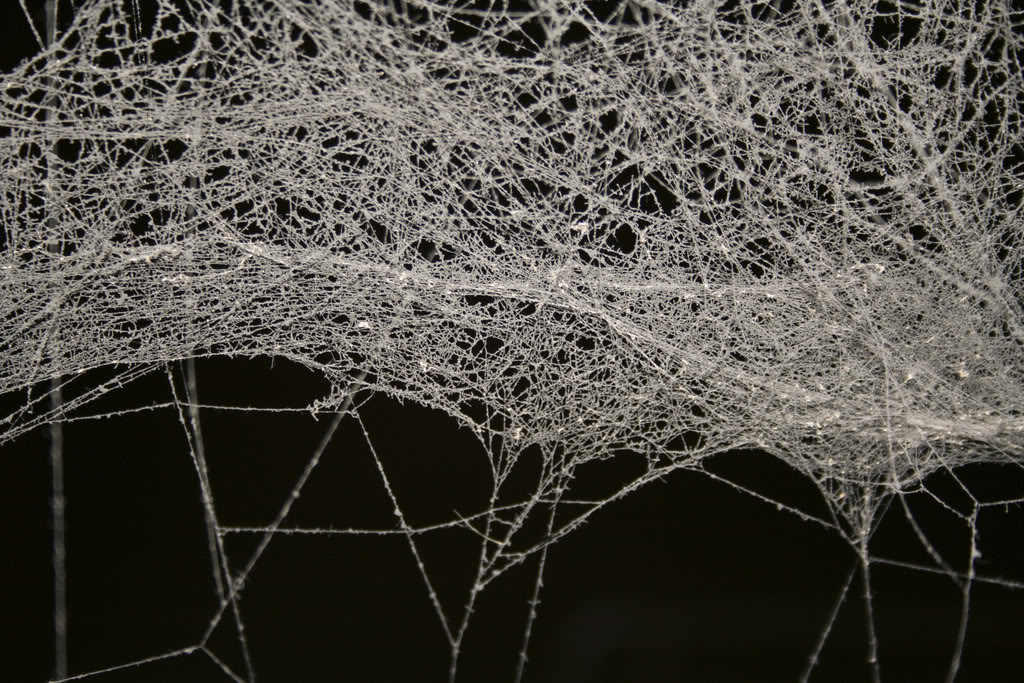 a three-dimensional web, secured in space by an upper trellis with strands of high-tension catching threads that reach an underlying layer of webbing and are lined with sticky droplets. A crawling insect breaks the strand and is drawn up into the web.
Sheet Webs: Sheet webs are like deadly hammocks, strung across grass or leaves. They consist of a dense mass of threads with a maze of crisscrossing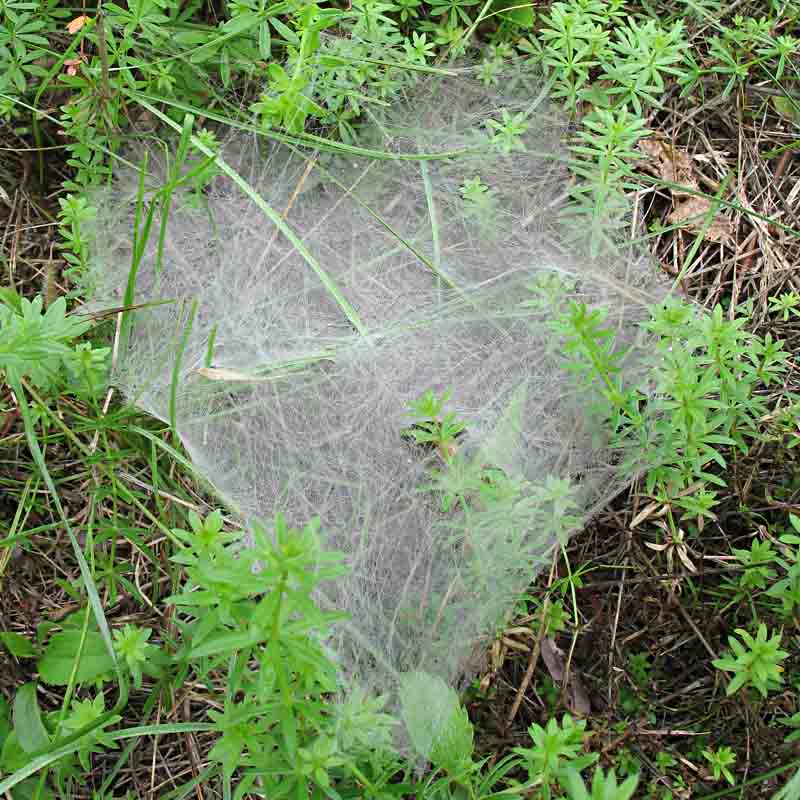 trip threads strung above the sheet. An insect flies into a thread and is knocked off course into the net below. The spider, which hangs upside down beneath the web, quickly runs to the insect and pulls it through the webbing. Sheet webs last a long time because the spider repairs any damage.
Wooly Webs: Woolly webs capture with electrostatically-charged silk nanofibers, rather than adhesive silk — kind of like cling wrap. The organ th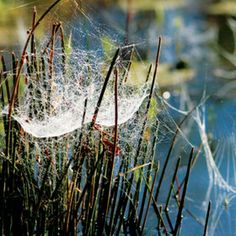 at produces this silk, the cribellem, is a primitive feature of arachnids. This silk webbing is acually combed into a wooly texture to better ensnare their prey.
Funnel Webs: Funnels can be a main feature of web design and pretty impressive. Typically, a sheet of silk spans the exterior of the funnel with strategically placed trip lines, which are
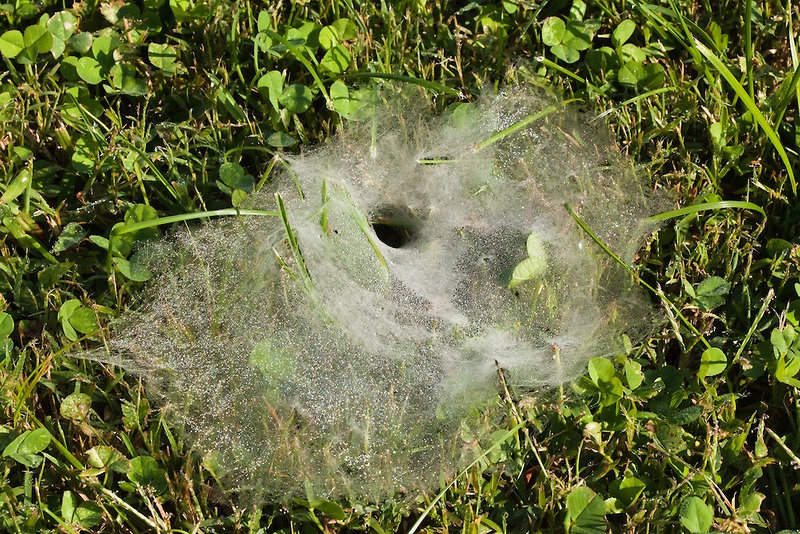
used to entangle prey, and the spider waits in its funnel retreat for the web to vibrate. Now it jumps out and snags its meal.
Orb Webs: Orb webs are wheel-shaped webs designed to capture flying insects. The frame is made of durable silk, while the spokes are of an elastic capture thread lined with sticky droplets to secure the victim. The spider starts this web by releasing a single thread of silk into the wind and waiting for it to attach to another branch, forming a bridge. The spider then crosses the bridge and releases another thread,
 forming a V-shape, and then it lowers itself, to form a Y-shape. Once the core of the web is secure, the spider lays out more threads from various anchor points, then from the center to the edges until the web is complete. You would think, after all the work to create this masterpiece it would last more than one night, but the spiders that create these webs, take them down or more rightly consume them and spin a new web the next night.
There is nothing in nature more beautiful, versatile, or suited to its purpose than the spider web. So while admiring their beautiful artwork, it is prudent to remember they are not welcome house guests.
A spider infestation can cause contamination of food in kitchens or pantries, and depending on the species, there could be health risks if family members unexpectedly happen upon a lurking spider. Taking action to prevent spiders goes a long way in avoiding these risks.
Being proactive about spider control will reduce the likelihood of any spiders making your home theirs and possibly harming a family member. But if you suspect you have a spider infestation in your home, contact a pest professional to identify the species and properly and efficiently remove them.
0 Comments