
Insect Trivia: Who’s got The Most Toxic Venom?

by | Dec 22, 2015 | 0 comments

The insect with the most toxic venom is not necessarily the most painful or the most lethal. Pain is a really subjective. What some might find excruciating, others might feel as merely uncomfortable. We can’t compare venom on the basis of incidence statistics, either, since people’s immune systems respond differently to the same venom. For those with bee venom allergies, a bee sting can be deadly, though the venom itself is not that toxic.

To compare insect venoms and determine which is the most toxic, an objective way to measure them is needed. A standard measure used in toxicology studies is the LD50, or median lethal dose. The higher the LD50 the lower the toxicity rate.

The LD50 measurement determines the amount of a toxin, relative to body weight, that is required to kill exactly half of a given population of organisms. In this study, researchers tested insect venom on mice to compare and rank their toxicity.Harvester Ant Maricopa
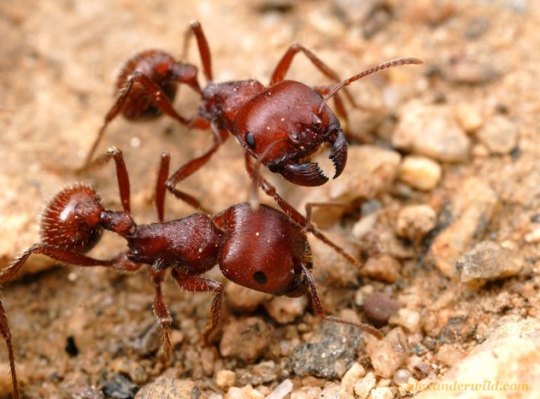
Ok, which insect is the most toxic? The harvester ant, Pogonomyrmex maricopa. one of the most common species of harvester ants found in the southwestern United States. With an LD50 measurement of just 0.12 mg per kg of body weight, the harvester ant venom is far more toxic than that of any bees, wasps, or other ants.

By comparison, honey bee venom has an LD50 measure of 2.8, and a yellow jacket’s venom has an LD50 of 3.5 per kg of body weight.

So, it takes just 12 stings from the venomous harvester ant to take out a 4 1/2 pound animal or three hundred and fifty (350) stings to kill a 150 pound human.

If you plan on roaming around the desert areas of the Southwestern U.S., watch your step, cause these guys pack a wallop!

0 Comments

Submit a Comment

Your email address will not be published. Required fields are marked *

Recent Post

How to Identify Rat Droppings in San Diego Homes

Rat droppings are one of the first signs of a rodent problem in your home. In San Diego, roof rats and Norway rats are common, especially in attics, crawl spaces, and near food sources. These pests often stay hidden, so spotting rat droppings early helps prevent a...

How to Identify Mouse Droppings in Riverside Homes

Mouse droppings are often the first sign of a mouse infestation in Riverside homes. These small pests stay hidden, but they leave clear evidence, such as mouse poop, gnaw marks, and nesting materials. Spotting mouse droppings early helps prevent a larger pest problem....

What Attracts Mice Into Los Angeles Homes

Mice are a common issue for homeowners, tenants, and business owners in Los Angeles. With mild weather year-round and dense neighborhoods, house mice find many ways to enter homes. Once inside, mice reproduce fast and can turn a small mouse problem into a large...

Understanding the Tick Life Cycle in Irvine

Ticks are a common problem for Irvine homeowners, tenants, and property managers, especially in parks, along trails, and in landscaped areas. The tick life cycle helps explain how to prevent tick bites and lower the risk of tick-borne diseases. In Southern...

How to Identify Tick Bites in San Bernardino

Tick bites are becoming more common in San Bernardino. Ticks live in grassy and wooded areas, as well as residential yards. They attach to exposed skin, so people often miss the bite at first. These bites can lead to health problems like Lyme disease and other...