

 800-901-1102
You walk into the garage at dusk and spot a shiny black spider wedged in the corner of a stored box. Or you brush cobwebs off the patio furniture and find a pale, spiky egg sac stuck to the underside. That flash of black legs or an unfamiliar marking can be unsettling, but identifying it is usually simple once you know what to look for.
California spiders range from completely harmless house guests to the western black widow, the species most likely to cause a serious bite. This guide breaks down how to tell them apart by body shape, markings, and web style, and explains when a sighting is worth calling in a professional.
Key Takeaways
- The western black widow, with its shiny black body and red hourglass marking, is the species most likely to cause a serious bite in California.
- Brown recluse spiders aren’t established in California, though the similar-looking brown widow has spread through Southern California yards and garages.
- Most spiders you’ll spot indoors, like orb weavers, wolf spiders, and jumping spiders, are harmless and even help control other pests.
- Reducing clutter and sealing entry points cuts down on sightings, but recurring webs or egg sacs near your home are worth a professional inspection.
Identifying the Black Widow, California’s Most Concerning Spider
The black widow is the one California spider worth learning to recognize on sight. It stays hidden by nature, so most encounters happen only when it’s disturbed.
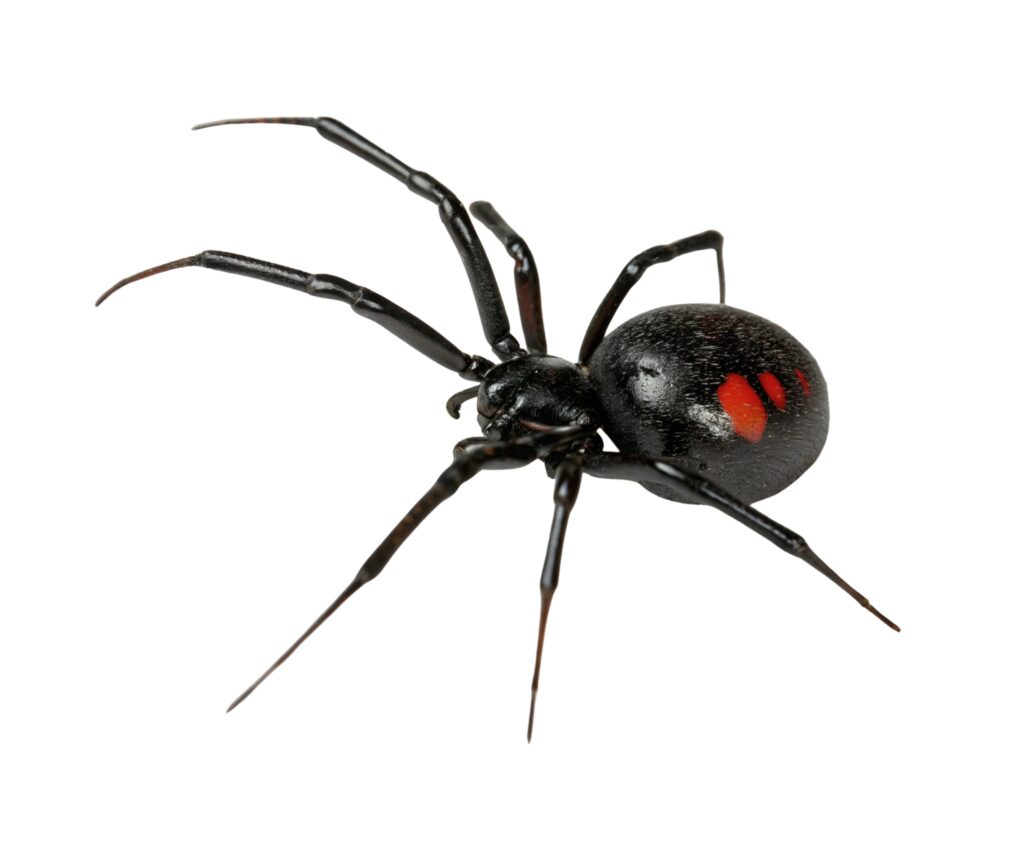
Recognizing an Adult Female
Adult females have a glossy black, rounded abdomen about half an inch long, with a red or orange hourglass marking on the underside. Males and young females look completely different: smaller, lighter in color, and marked with tan or white stripes rather than solid black.
Where They Build Webs and What a Bite Means
Black widows build irregular webs with a tunnel in the middle. These webs are often in dry, undisturbed spots close to the ground, such as woodpiles, garages, meter boxes, and the underside of patio furniture.
Bites are uncommon. These spiders tend to bite only when trapped against the skin. But a black widow bite can still cause symptoms ranging from mild discomfort to more serious internal effects, so anyone bitten should stay calm and get medical advice rather than wait it out.
Brown Widows: A Newer Arrival in Southern California
The black widow isn’t the only widow spider you’re likely to come across. Over the past two decades, a smaller relative has become common across the region and is frequently mistaken for its more infamous cousin.
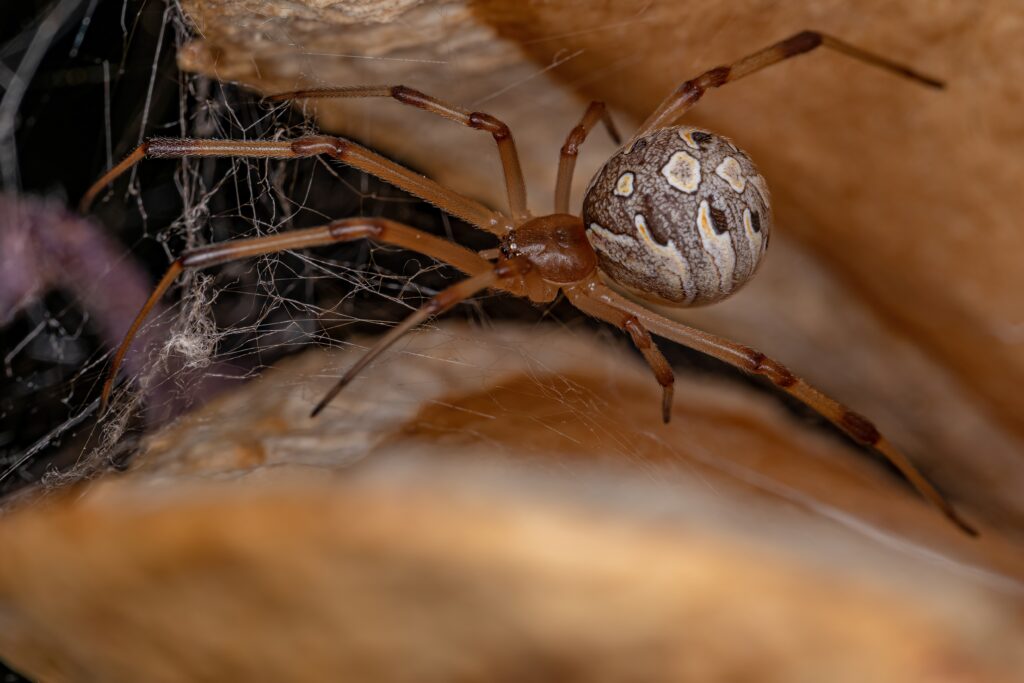
How Brown Widows Differ From Black Widows
The brown widow arrived in Southern California in the early 2000s. It’s smaller than the black widow, with a tan-to-dark-brown mottled body and an orange or yellow hourglass mark instead of red. The easiest way to tell the two apart is the egg sac: brown widow sacs are round with small spiky points covering the surface, while black widow sacs are smooth.
Brown widow bites are generally milder than black widow bites, though medical attention is still worthwhile for any confirmed widow bite.
Where Brown Widows Are Spreading
A multi-year survey of urban Southern California, published in the Journal of Medical Entomology, found brown widows to be far more common than native black widows around homes, parks, playgrounds, and landscaped areas, while black widows were more often found in drier, less disturbed habitats away from structures. That shift is part of why more homeowners are spotting brown widows on patio furniture and under eaves.
Why Brown Recluse Spiders Rarely Show Up Here
Despite frequent claims of brown recluse sightings, California doesn’t have an established population of this spider. According to UC IPM, a study that collected suspected brown recluse specimens from across the state found only a small number of genuine brown recluses, and nearly all of those were traced back to items recently shipped from states where the species does live.
The Desert Recluse: California’s Native Look-Alike
A related species, the desert recluse, does occur naturally in the state’s southeastern deserts, identifiable by a violin-shaped mark and six eyes arranged in pairs rather than the usual eight. Outside of those desert regions, a spider with a violin-shaped mark is far more likely to be something else.
Common Harmless Spiders Around the House
The spiders you’re most likely to run into indoors or in the garden pose no threat, and a quick look at their web and body shape usually confirms it.
How to Tell Them Apart
- Orb weavers build large, symmetrical circular webs, often strung between plants or eaves, and become more noticeable in late summer and fall.
- Wolf spiders are fast-moving ground hunters with hairy legs and no web; they look intimidating but aren’t dangerous.
- Jumping spiders are small, compact, and often have iridescent markings; they hunt by sight rather than by webs.
- Cellar spiders, sometimes confused with daddy longlegs, spin loose tangled webs in corners and basements and have fangs too small to break human skin.
Checking a spider’s web style and body shape against these traits handles most identification questions without needing a closer look.
What to Do If You Spot a Spider or Get Bitten
Once you’ve ruled out a widow spider, most sightings call for nothing more than a bit of everyday upkeep. A bite calls for a different response.
Everyday Prevention Steps
Seeing a spider outdoors during the day is rarely cause for concern, since most species avoid people and only bite when cornered. Indoors, reducing clutter in garages, closets, and storage areas removes the hiding spots that spiders and their insect prey rely on. Sealing gaps around doors, windows, and foundations also cuts down on how many make it inside in the first place.
If a Bite Happens
Wash the area with soap and water and watch for spreading redness, increasing pain, or drainage. The California Poison Control System recommends calling their line if symptoms feel concerning or going to an emergency room if symptoms are severe. Save the spider if possible, since a confirmed identification helps guide treatment.
When Professional Spider Control Makes Sense
A spider or two rarely justifies a service call. Ongoing activity, like webs that keep reappearing in the same spot, is the real signal it’s time to bring in help.
Recurring webs around eaves and window frames, egg sacs on the property, or a confirmed black widow near an entryway, patio, or play area are good reasons to schedule an inspection rather than handling it yourself.
How Spider Treatment Works
Corky’s Pest Control has been serving Southern California homeowners for more than 50 years, and our spider control service focuses on the areas where spiders are active around the home. A technician can inspect common hiding and web-building spots, identify conditions attracting spiders, and recommend a treatment plan based on the property.
Because spiders follow their food source, reducing the insect population around a home is often part of a lasting solution. Corky’s can also help confirm what you’re seeing.
California Spiders: Bottom Line
The spiders sharing your California yard right now are likely doing more good than harm, keeping other insect populations in check. The western black widow is the one to take seriously, and the quickest way to rule it out is by checking for a shiny black body with a red or orange marking in a sheltered, undisturbed spot like a garage corner or woodpile. Brown recluse spiders are not a realistic concern here, and most of what looks alarming, from wolf spiders to orb weavers, is controlling other insects rather than posing any risk.
If you keep finding webs near entryways, egg sacs on outdoor furniture, or you’d rather have a professional confirm what’s actually on your property, schedule an inspection with Corky’s Pest Control to get a treatment plan built around your home instead of guessing at what you’re looking at.
Frequently Asked Questions
Are brown recluse spiders found in California?
No. California does not have an established brown recluse population. Verified sightings are extremely rare and usually involve a spider that arrived in belongings shipped from a state where the species is common.
What is the most dangerous spider in California?
The western black widow is the spider responsible for most serious bites in the state. Its bite can cause significant discomfort and, in some cases, more serious internal symptoms, though fatalities are very rare with medical treatment.
How do I tell a black widow from a brown widow?
Black widows are solid glossy black with a red hourglass marking, while brown widows are tan to dark brown with a mottled pattern and an orange or yellow hourglass. Their egg sacs are the clearest giveaway: brown widow sacs have small spiky points, while black widow sacs are smooth.
Are most spiders in California dangerous?
No. The vast majority of spiders found in California homes and yards, including orb weavers, wolf spiders, jumping spiders, and cellar spiders, are harmless and even help control other insect pests.
When should I call a doctor after a spider bite?
Seek medical advice if a bite causes increasing pain, spreading redness, swelling, or any drainage, or if you have reason to believe a black widow was involved. The California Poison Control System is available for guidance on next steps.
0 Comments