
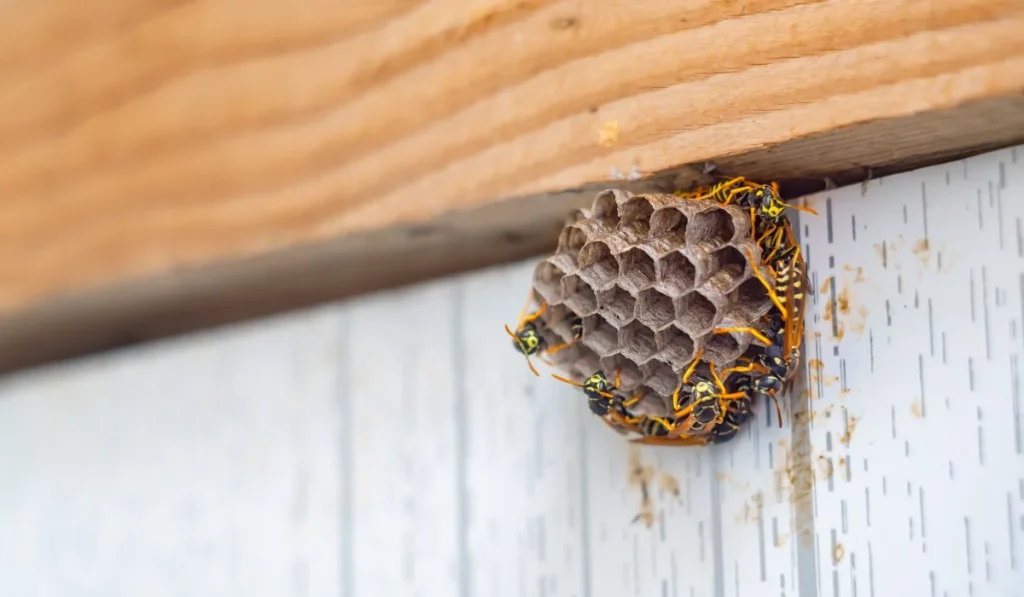
Knowing which wasps in California are using the property matters because yellowjackets, paper wasps, and mud daubers don’t nest or defend themselves in the same way. Yellowjackets deserve the most attention late in the season. Their colonies have been growing for months, so more workers are out looking for food, and more are available to defend the nest. For homeowners, the useful questions are practical ones: What kind of wasp is this? Will it sting? Why are there suddenly so many near the patio? And will the nest disappear if it is left alone?
Key Takeaways
- Yellowjacket activity rises late in the season. Mature colonies have more workers foraging and defending the nest.
- Nest style helps identify the wasp. Ground openings, open paper combs, and mud cells point to different types of wasps in California.
- Nest location matters as much as species. A nest beside a doorway, patio, play area, or pool creates more contact than one in a rarely used corner of the property.
Which Wasps Live Around California Homes?
The most common homeowner encounters involve yellowjackets, paper wasps, and mud daubers. Body color can help with identification, but the nest and the insects’ flight pattern often provide better clues from a safe distance.
| Wasp Type | Common Nest Location | Typical Activity Around a Home | Nest Defense |
|---|---|---|---|
| Yellowjackets | Soil, old burrows, wall voids, and sheltered cavities | Food scavenging and steady traffic through one entrance | Strong around an active colony |
| Paper wasps | Eaves, patio covers, railings, and sheltered ledges | Movement between flowers and an exposed paper comb | Defensive when the nest is approached |
| Mud daubers | Garage walls, ceilings, sheds, and other dry surfaces | Individual wasps carrying mud or prey to nest cells | Usually limited because there is no worker colony |
Yellowjackets
Yellowjackets in California live in social colonies. A queen starts the nest, then the worker population grows through the warmer months. The colony may be underground, inside an old animal burrow, or hidden in part of a structure.
They also have feeding habits that bring them close to people. Meat, ripe fruit, sweet drinks, trash, and food residue can draw workers into patios and yards. Near the nest, the behavior changes because a large number of workers may respond to disturbance.
Paper Wasps
Paper wasps in California usually build exposed combs beneath protected surfaces. The cells remain visible, which makes these nests easier to recognize than a concealed yellowjacket colony.
Location determines how often people cross paths with them. A small paper wasp nest beneath an unused shed roof creates less contact than one directly above a sliding door or patio chair.
Mud Daubers
Mud daubers in California are solitary wasps. A female builds individual mud cells and supplies them with prey for her developing young.
That lack of a worker colony changes the risk around the nest. Mud daubers can sting, but they are generally much less defensive around their nesting sites than social yellowjackets.
Do Wasps in California Sting?
Female yellowjackets, paper wasps, and mud daubers can sting. The likelihood of a sting depends on the species, whether a nest is nearby, and what is happening around it.
Yellowjackets create the greatest concern near an active colony. Mowing over a ground nest, digging beside the entrance, or walking close to a concealed opening can bring several workers out at once. Paper wasps may defend an exposed comb when someone approaches closely. Mud daubers don’t have a social worker force defending a shared nest.
Wasps can also sting repeatedly because their stingers generally don’t remain embedded after one sting. A disturbed social nest can therefore create a very different situation from a single wasp passing through the yard.
A CDC report on hornet, wasp, and bee stings recorded 788 deaths in the United States from 2011 through 2021, or about 72 per year. Roughly 84% occurred among males. Those figures combine bees, hornets, and wasps nationwide, so they aren’t California-specific.
Why Do Yellowjackets Crowd Patios in Late Summer?
Late-summer yellowjacket activity can feel sudden even though the colony has been building for months. An annual colony has far more workers near the end of the season than it did in spring, so more insects are moving between the nest and surrounding food sources.
The UC Statewide Integrated Pest Management Program identifies late summer and fall as the period when yellowjackets become especially troublesome around people. Colony growth and heavy foraging activity are major reasons homeowners notice them more often.
A Larger Colony Means More Visible Activity
Earlier in the season, a young yellowjacket colony has relatively few workers. By late summer, steady traffic through a small ground hole or wall opening can make a previously unnoticed nest much easier to spot.
The larger worker population also affects nest defense. More insects are available to respond when mowing, trimming, digging, footsteps, or other activity occurs close to the entrance.
Patios Provide Easy Food Sources
Yellowjackets are opportunistic foragers, and patios can place several food sources within a small area.
| Patio or Yard Attraction | Why Yellowjackets Investigate It |
|---|---|
| Soda, juice, and sweet drinks | Accessible sugar |
| Ripe or damaged fruit | Exposed fruit sugars |
| Outdoor meals | Protein, sweets, and scraps |
| Trash and recycling | Food and beverage residue |
| Pet food | Protein and strong food odors |
| Fallen fruit | A recurring food source in the same area |
One yellowjacket at a drink doesn’t prove a nest is in the yard. Repeated workers following the same path toward a ground hole, wall gap, or landscape feature are a stronger clue.
Will a Wasp Nest Leave on Its Own?
Many yellowjacket and paper wasp colonies follow an annual cycle. As the season ends, the old colony declines while new queens leave and survive separately before starting future colonies.
That doesn’t make waiting the best choice for every wasp nest. Southern California can stay warm well into the period when colder regions are already seeing much less insect activity. A nest beside a frequently used area may remain active longer than a homeowner expects.
Location Matters More Than the Calendar
An active colony beside a doorway, pool, patio, children’s play area, or regularly mowed lawn creates repeated opportunities for accidental disturbance. A nest hidden inside a wall or roofline also makes it difficult to judge its size or exact position from outside.
A rarely used corner of the property presents a different situation. The practical question isn’t simply whether the colony will eventually decline. It’s whether people must keep passing close to it while it remains active.
How to Tell Whether a Nest Is Still Active
Watch from several yards away rather than approaching the nest. Repeated traffic in and out of one opening is the clearest clue that the site is still occupied.
| What You See | What It May Indicate |
|---|---|
| Yellowjackets repeatedly entering one ground hole | Possible underground nest |
| Steady traffic through a wall or roof gap | Possible concealed colony |
| Open paper cells beneath an eave | Paper wasp nest |
| Dry mud cells attached to a wall or ceiling | Mud dauber nest |
| Scattered wasps visiting flowers | Normal foraging, not clear evidence of a nearby nest |
Don’t block an active entrance, stand over a suspected ground nest, strike an exposed comb, or climb a ladder for a closer inspection. Those actions put you close to the colony just as the insects may begin defending it.
When Wasp Activity Requires Professional Removal
Professional removal makes sense when an active nest is close to everyday activity, concealed inside a structure, underground, elevated, or difficult to reach without getting close to the colony. Late-season yellowjacket nests deserve extra caution because the worker population is near its seasonal peak and nest defense can be strong.
Correct identification matters too. A few mud dauber cells on a remote wall don’t call for the same response as a yellowjacket colony beside a patio. A trained technician can identify the wasp, trace the activity back to its nesting area, and assess how the nest can be reached without forcing a homeowner into close contact with it.
If wasp activity is making a doorway, patio, pool area, walkway, or another part of your Southern California property difficult to use, contact Corky’s Pest Control for an inspection. Professional wasp control service is especially useful for hidden, elevated, or heavily defended nests where identification and safe access matter as much as removal.
California Wasps: FAQs
What time of year are wasps most active in California?
Yellowjackets become especially noticeable in late summer and fall because their colonies have spent much of the warm season growing. More workers are outside searching for food, and mature colonies have more insects available to defend the nest. Local temperatures can affect how long that activity continues.
What attracts yellowjackets to a patio?
Sweet drinks, ripe fruit, meat, food scraps, pet food, trash, recycling residue, and fallen fruit can all attract foraging yellowjackets. Covering food and drinks, cleaning spills, and keeping waste containers closed can make a patio less rewarding for workers searching for food.
Will a wasp nest go away on its own?
Many social wasp colonies decline naturally as their annual cycle ends, but timing varies with local conditions. Waiting may not be practical when an active nest sits beside a doorway, patio, pool, play area, or another place people use every day.
How can I tell if wasps are nesting near my house?
Look for repeated flight to the same location. Several wasps entering one ground hole, wall opening, or roof gap can indicate a nearby nest. An exposed paper comb suggests paper wasps, while dried mud cells are more consistent with mud daubers.
Are mud daubers as aggressive as yellowjackets?
No. Mud daubers are solitary and don’t have a worker colony defending a shared nest. They can sting, but they are generally much less defensive around their nesting sites than yellowjackets, especially when compared with a mature yellowjacket colony late in the season.