
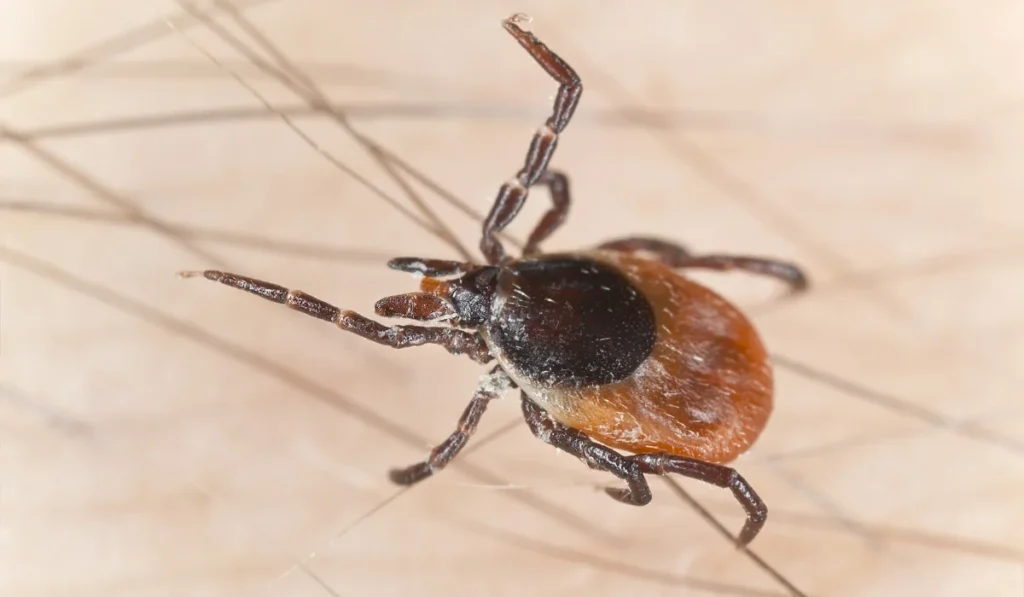
Most people picture ticks after a hike, a camping trip, or a walk through tall grass. Yet ticks in California can turn up much closer to home. A dog can pick one up beside a brushy fence. Wildlife can carry ticks through a backyard. Thick groundcover or leaf litter can give them shelter only a few steps from a patio.
That’s especially relevant in Southern California, where neighborhoods often sit beside canyons, hillsides, parks, open lots, and other wildlife habitat. A yard doesn’t need to look neglected to have a few shaded areas where ticks can wait for a passing host.
Understanding ticks in California means looking beyond hiking trails. Homeowners need to know which species may show up, when they are active, where they wait in landscaping, what a tick bite can mean, and how everyday yard care can lower exposure.
Key Takeaways
- Ticks can reach residential yards through wildlife, pets, brush, leaf litter, and dense landscaping.
- California’s major homeowner concerns include the western black-legged tick, American dog tick, and Pacific Coast tick.
- Regular tick checks, pet prevention, landscape maintenance, and targeted professional tick control can reduce repeated exposure.
Why Ticks in California Show Up Around Homes
Ticks in California don’t fly or jump toward people. They wait for a person or animal to pass close enough to make contact. This behavior, often called questing, puts low vegetation, grass, brush, and shaded landscape edges at the center of residential tick exposure.
Where Ticks Wait in the Yard
A few parts of a property deserve more attention than an open, sunny lawn. Dense shrubs beside a walkway, ivy along a wall, fallen leaves under plants, weeds behind a shed, and vegetation growing along a fence can all create sheltered tick habitat. The same applies where maintained landscaping meets a canyon edge, open lot, or unmanaged slope.
Ticks in a yard are therefore less about how neat the property looks and more about where hosts and vegetation overlap. Dog runs, narrow side yards, shaded groundcover, and paths that brush against plants are worth checking first.
How Wildlife and Pets Bring Ticks Closer
Rodents, rabbits, deer, coyotes, opossums, and other animals can move ticks between natural habitat and residential property. Homeowners may rarely see that traffic because much of it happens at night or along the outer edges of the yard.
Pets shorten the distance further. A dog that noses through brush on a neighborhood walk or patrols the same backyard fence each afternoon can encounter ticks without ever visiting a hiking trail. Repeated ticks on dogs can point to a regular exposure area that deserves investigation.
Three California Ticks Homeowners Should Know
Among the types of ticks in California, three deserve particular attention around homes. They use different hosts, follow different seasonal patterns, and are associated with different illnesses.
| Tick | Where Homeowners May Encounter It | Why It Matters |
|---|---|---|
| Western black-legged tick | Brush, leaf litter, wooded areas, shaded vegetation, and wildlife corridors | It’s the main tick associated with Lyme disease in California. Small nymphs can be difficult to notice. |
| American dog tick | Grass, brush, trails, yards, and areas frequently used by dogs | It readily feeds on dogs and may also bite people. It’s associated with Rocky Mountain spotted fever and tularemia. |
| Pacific Coast tick | Chaparral, brush, foothills, open land, and residential edges near natural habitat | It feeds on wildlife, pets, livestock, and people and is associated with Pacific Coast tick fever. |
Western Black-Legged Ticks
The western black-legged tick gets the most attention because it can transmit Lyme disease. Risk varies across the state, though. Northern coastal California and parts of the Sierra Nevada foothills have historically had more Lyme activity than most of Southern California.
Size also changes the risk of overlooking a tick. Nymphs are much smaller than adults and may remain unnoticed around the scalp, waist, or other less visible parts of the body.
American Dog Ticks
American dog ticks are particularly relevant to homeowners with pets. Dogs can encounter them in grassy or brushy areas, then carry them toward patios, kennels, sleeping areas, or the house.
People can be bitten as well. Their association with Rocky Mountain spotted fever and tularemia is one reason homeowners shouldn’t treat every tick encounter as a Lyme disease question alone.
Pacific Coast Ticks
Pacific Coast ticks are a western species commonly associated with wildlife habitat. Homes near brush, canyon edges, foothills, and open space may sit close to areas where their hosts regularly travel.
This tick can also bite people and pets. It’s linked with Pacific Coast tick fever, another reminder that California tick-borne diseases extend beyond Lyme disease.
When Are Ticks in California Most Active?
There’s no single tick season in California. Species, life stage, rainfall, temperature, elevation, and local vegetation all affect activity. California ticks along the coast may follow a different pattern from ticks in mountain or inland communities.
Cooler Months Still Carry Tick Activity
Adult western black-legged ticks are commonly active during the cooler, wetter part of the year. Pacific Coast ticks can also remain active through cooler months and into spring. Someone who assumes tick prevention ends with summer can therefore miss a significant part of the season.
Local weather matters as much as the calendar. Rain and moisture can change conditions in vegetation, while prolonged hot, dry weather can push ticks toward more protected areas.
Spring and Early Summer Bring Smaller Ticks
Western black-legged tick nymphs become more active during spring and early summer. Their size makes careful tick checks especially useful because they are easier to overlook than adults.
American dog tick activity commonly rises during warmer months. For homeowners, the practical lesson is to adjust prevention through the year instead of choosing one date when tick season supposedly begins or ends.
Tick Bites, Health Risks, and Safe Removal
A tick bite doesn’t automatically mean an infection occurred. Disease risk depends on the tick species, whether that individual tick carries a pathogen, how long it remains attached, and the disease involved.
Lyme Disease in California
Lyme disease occurs in the state, but the risk isn’t evenly distributed. California averages 0.2 cases per 100,000 people per year. Statewide averages don’t describe the exact risk in one county or backyard.
In some higher-risk parts of northern California, the UC Statewide Integrated Pest Management Program reports that roughly 1% to 2% of adult western black-legged ticks and 2% to 15% of nymphs may carry the bacterium that causes Lyme disease. Those numbers shouldn’t be applied to Southern California as a whole.
Other Tick-Borne Diseases
American dog ticks are associated with organisms that cause Rocky Mountain spotted fever and tularemia. Pacific Coast ticks can transmit the organism associated with Pacific Coast tick fever.
If fever, rash, headache, unusual fatigue, muscle aches, or other concerning symptoms appear after a known tick bite, tell a medical professional about the exposure. Pet health questions should go to a veterinarian.
How to Check for and Remove a Tick
Do a tick check after yard work, hiking, walking through brush, or spending time where vegetation touches clothing. Look around the scalp, hairline, ears, armpits, waist, groin, and backs of the knees. For dogs, check the ears, neck, collar area, belly, legs, between the toes, and through the coat.
If you need to know how to remove a tick, use fine-tipped tweezers. Grasp it as close to the skin as possible and pull upward with steady, even pressure. The Centers for Disease Control and Prevention (CDC) states that, in most cases, a tick carrying the Lyme disease bacterium must remain attached for more than 24 hours before transmission occurs. Clean the bite area and your hands after removal, and skip burning, twisting, or coating the tick with household substances.
Reducing Tick Exposure Around Your Southern California Home
Effective tick prevention starts where people and pets actually spend time. Cut back dense vegetation along paths and fences, remove accumulated leaves and yard debris, and keep dog resting areas away from heavy brush when the property allows it. Pay close attention to the transition between maintained landscaping and unmanaged growth because these edges often concentrate wildlife movement and tick exposure.
Veterinary prevention handles another part of the problem. Pets can pick up ticks away from home, so yard tick control should work alongside the protection recommended by a veterinarian. If you keep finding ticks in the backyard or on pets despite routine maintenance, the property may have a recurring harborage or wildlife route that’s easy to miss.
That’s where professional service can add value. Corky’s Pest Control can inspect Southern California properties for vegetation, shaded harborage, wildlife travel areas, and other conditions associated with repeated tick encounters, then recommend targeted treatment where it makes sense. Professional tick control works best when it addresses the places ticks and their hosts are actually using rather than treating the property as one uniform space.
Ticks in California: FAQs
Are ticks common in California backyards?
Ticks can occur in California backyards when the property provides suitable vegetation or receives regular wildlife traffic. Brushy fence lines, leaf litter, groundcover, pet areas, and yards bordering open space can create more opportunities for people or pets to encounter them.
What months are ticks most active in California?
California doesn’t have one universal tick season. Western black-legged tick adults are commonly active during cooler, wetter months, while their nymphs become more active in spring and early summer. American dog ticks tend to become more active during warmer periods.
Can dogs bring ticks into the house?
Yes. Dogs can pick up ticks in a yard, on neighborhood walks, or anywhere they pass through suitable tick habitat. Regular tick checks and veterinarian-recommended prevention help reduce that risk. Repeated encounters may also justify checking the property for outdoor exposure areas.
Should I worry if I find one tick in my yard?
One tick doesn’t prove that a property has a widespread infestation. It does show that a tick or its host reached the area. If ticks keep appearing on people or pets, look for recurring exposure points such as brush, wildlife routes, shaded vegetation, or heavily used pet areas.